
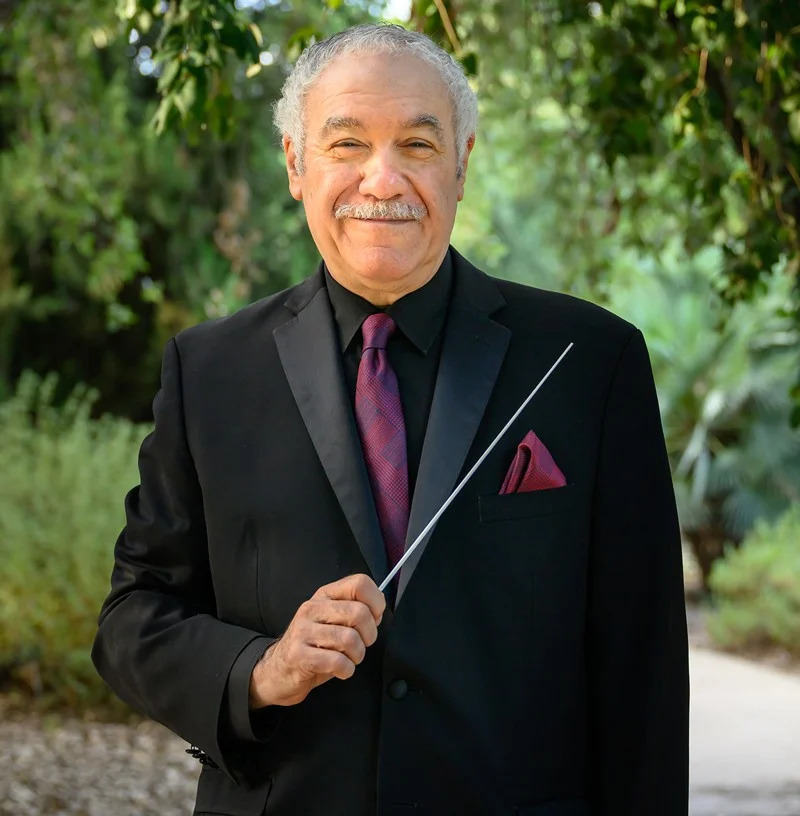
Few musicians have observed the evolution of Broadway from such a privileged vantage point as Larry Blank. Conductor, arranger, pianist, educator, and tireless advocate for the American musical theatre tradition, he has spent more than five decades working with many of the artists who defined the modern Broadway canon.
On the occasion of his performances of Stephen Sondheim’s Company at Geneva’s Grand Théâtre, with the Orchestre de la Suisse Romande, Larry Blank looks back on a lifetime of music: from his childhood memories of Broadway’s golden years to his collaborations with Sondheim, Jerry Herman, Marvin Hamlisch, Jonathan Tunick, and countless others. Along the way, he offers rare insights into the art of arranging, the changing landscape of musical theatre, and the enduring legacy of the Great American Songbook.
Above all, this conversation reveals the warmth, humor, and generosity of a musician whose love for the theatre remains every bit as compelling as the extraordinary career that followed.
1/ Larry, can you take us back to your earliest memories of musical theatre? Was this world already familiar to you when you were a child?
There was always music in our home. I grew up listening to South Pacific1, The King and I2, and all those cast albums that seemed to be constantly spinning on the record player because they were the biggest Broadway hits of the day. Back then3, you heard those songs everywhere. They were on the radio all the time, and everyone knew the tunes and could hum them.
That was the musical world I grew up in. Then, when I was around eight, nine, or ten years old, my parents started taking me to see Broadway shows. To me, it felt as natural as going to the movies. And, of course, seeing a Broadway musical wasn’t nearly the financial commitment it has become today!
2/ What was the first Broadway show your family took you to see?
The first one was Fiddler on the Roof4. Actually, it was my older brother who took me. The score was by Jerry Bock5, with lyrics by Sheldon Harnick6. What’s remarkable is that the show’s orchestrator, Don Walker7, later became something of a mentor and teacher to me. What an extraordinary coincidence!
From that point on, I developed a real appetite for musical theatre. My parents took me to just about every new Broadway show. I saw I Can Get It for You Wholesale8, which featured a young performer in a relatively small role who would later become rather famous: Barbra Streisand! My God, when I think about it now…
I also saw How to Succeed in Business Without Really Trying9, then Stephen Sondheim’s A Funny Thing Happened on the Way to the Forum10 starring the incomparable Zero Mostel11, and Anyone Can Whistle12. I was fortunate enough to experience all of these shows as a child and young teenager. It was simply part of everyday life !
Very early on, I developed a deep love for theatre music, much of which has become part of what we in America call the Great American Songbook13. I started listening to all the great standards, especially the songs of Cole Porter14.
My mother had been trained as a classical pianist, although she played mostly for her own enjoyment. There was also a great deal of classical music in the house, and the radio always seemed to be on. So I really did grow up surrounded by music. But musical theatre held a special place in my heart because it was the music of our world. As far back as I can remember, those songs were already part of my life.
I even remember hearing the original cast recording of Anyone Can Whistle in 1964 and thinking, “Wow, this is really strange music!” Even then, Sondheim was moving away from the traditional Broadway sound, and he was only at the beginning of his career.
3/ Larry, you also had a strong connection to jazz. In France, many people discovered the Anglo-American musical theatre repertoire through its influence on jazz musicians. A song like My Favorite Things, for instance, may be less famous today because of Mary Martin or Julie Andrews than because of the jazz interpretations it inspired. Is that also true in the United States?
Absolutely. A lot of that goes back to the era of the great dance bands, the big bands. After World War II and into the 1950s, those orchestras gradually began to disappear. The musicians who had played in them, most of whom were jazz players performing the popular music of their day, started looking for other opportunities. One of the major sources of employment was Broadway, particularly the pit orchestras.
As a result, many jazz musicians naturally found their way into the world of musical theatre. In a sense, Broadway music was being played by an army of jazz musicians! The saxophone, trumpet, and trombone players had often come straight out of the big-band tradition. Strings were a different story. Most string players came from the classical world because there was very little demand for violins, violas, or cellos in jazz orchestras, with a few notable exceptions.
I believe Benny Goodman15, for example, played in the orchestra of the original production of Girl Crazy. That’s a wonderful illustration of the close relationship between Broadway and jazz. Glenn Miller16 is another example, along with so many musicians of that generation.
Later, when I became a conductor, I still had the opportunity to work with artists who came out of that great American jazz tradition, the world of Tommy Dorsey17, Harry James18, Glenn Miller, and all those legendary bandleaders. You could also point to Doc Severinsen19, a magnificent jazz trumpeter whom most Americans probably knew as the bandleader on Johnny Carson‘s20 Tonight Show.
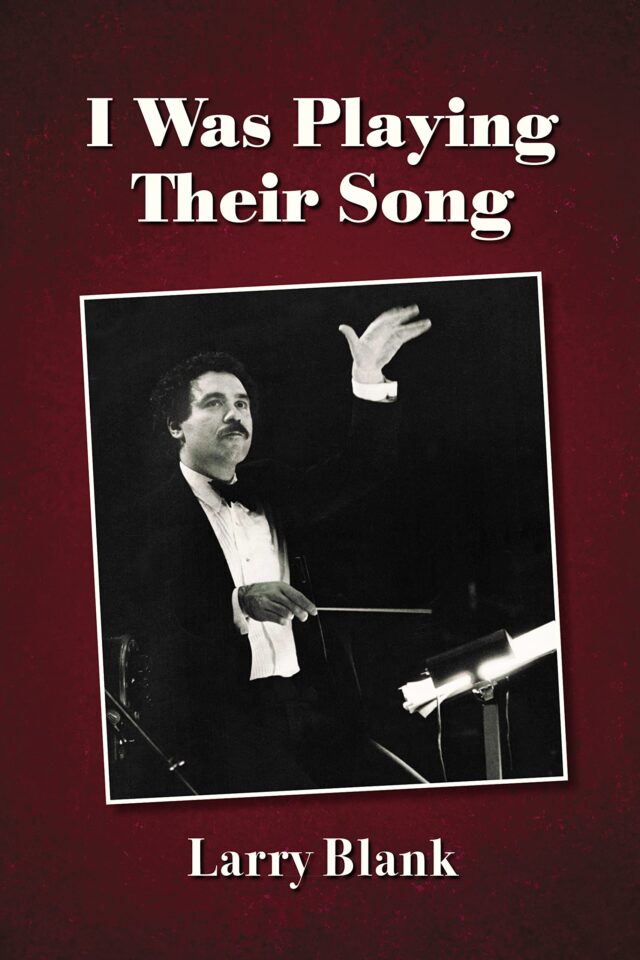
4/ Larry, your career is itself part of the history of musical theatre. From a European perspective, you seem almost like the perfect product of the American entertainment industry. At just twenty-two, Marvin Hamlisch and Michael Bennett entrusted you with the musical direction of the international company of A Chorus Line. Many other productions followed, from Evita and La Cage aux Folles to The Phantom of the Opera on the West Coast. At the same time, you arranged and conducted for numerous major artists and became closely associated with tributes celebrating Broadway and Great American Songbook legends such as Marvin Hamlisch, Jerry Herman, Kander and Ebb, Sammy Cahn, Jimmy Van Heusen, and many others, often with some of America’s most prestigious orchestras.
Looking back today, how do you view this remarkable career? Do you ever feel you have lived an extraordinary professional life ?
Yes, I suppose I do. What’s interesting is that when I was in high school and college, I was actually studying theatre. I wasn’t formally trained as a musician at first. I wanted to be an actor. At fourteen or fifteen years old, I was simply in love with the theatre. I played the piano as well, but little by little I found myself gravitating toward music because it suited my personality better and seemed to be where my real interests lay.
What I haven’t mentioned yet is the enormous influence of Don Pippin21, one of Broadway’s legendary conductors and musical directors. Don worked closely with Jerry Herman22 and conducted the original productions of Mame23 and many other major hits, including A Chorus Line24. For reasons I’ll never completely understand, he took a liking to me and became one of my strongest supporters.
It was Don who led Marvin Hamlisch25 to hire me. It was Don who convinced Michael Bennett26 to give me a chance. Really, it all started with Don Pippin’s recommendations.
Because I was so young, I began as a rehearsal pianist. I had endless energy, tremendous enthusiasm, and, truth be told, I was probably one of the cheapest pianists in all of New York! (laughs) I wanted to be there so badly that I said yes to every opportunity. People kept hiring me, and I was fortunate to get along well with just about everyone. Eventually, I was offered a job as a substitute conductor on a Broadway musical called Goodtime Charley27, starring none other than Joel Grey28 and Ann Reinking29. That became my Broadway debut when I was twenty-two years old.
Don saw that I could handle the work, and once he began recommending me, doors started opening everywhere. When people like Marvin Hamlisch or Jerry Herman heard my name, they naturally assumed I knew what I was doing because Don was backing me. At that time, his word carried tremendous weight on Broadway. Practically overnight, I acquired a level of credibility I certainly hadn’t earned through age or experience alone. It came because Don Pippin believed in me.
At the same time, I worked incredibly hard. Even though I wasn’t enrolled in a conservatory, I understood very early that I needed a solid musical education. I studied seriously, took private lessons, sought out Broadway conductors, and tried to learn from anyone willing to teach me. I immersed myself in both classical music and popular music because I wanted to understand conducting and arranging from every possible angle. I was very young, but I was also extremely ambitious. And I have to admit, with all due modesty, that I almost expected these things to happen! (laughs). Don had been extraordinarily generous in opening doors for me, but whenever an opportunity came along, I was ready for it. I could do the job. And once that happened, my reputation grew very quickly.
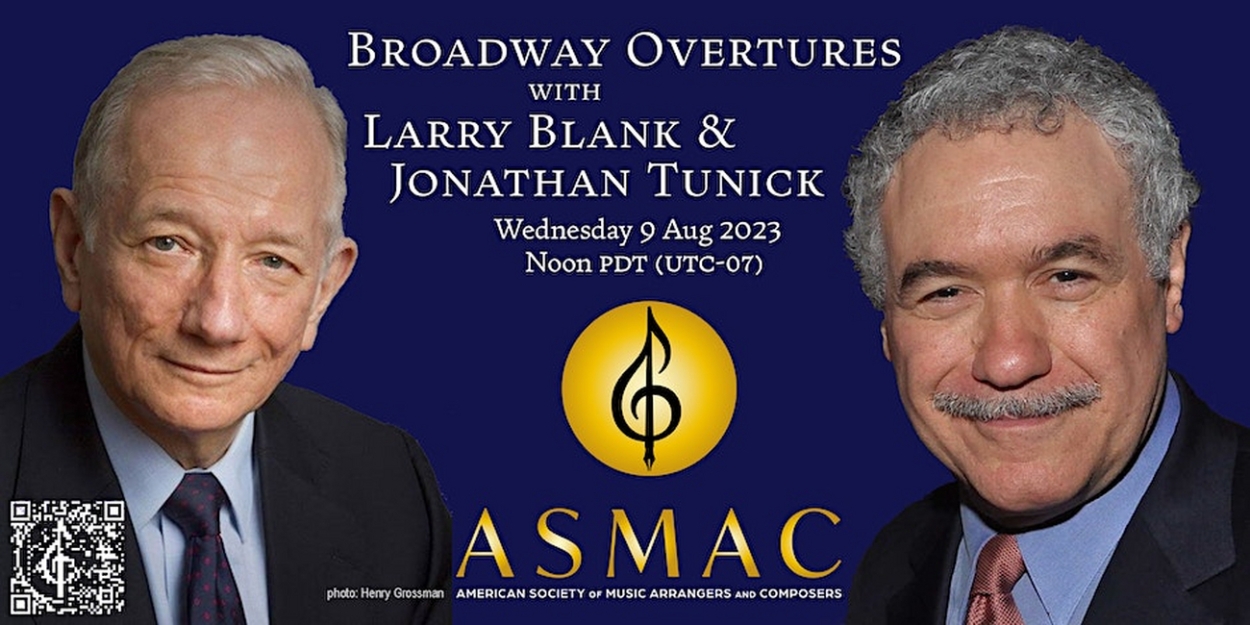
5/ In France, the role of the arranger in a jazz big band, a Broadway orchestra, or a Hollywood studio orchestra is often confused with that of the composer. Today, Larry, you are regarded as one of the leading arrangers in American musical entertainment, following in the footsteps of legends such as Nelson Riddle, Billy May, Conrad Salinger, Robert Russell Bennett, and Jonathan Tunick. Could you explain what an arranger actually does?
In jazz and popular music, the composer usually writes the song itself: the melody and a basic accompaniment. Some composers are more elaborate than others, of course, but in most cases they’re writing a thirty-two-bar song, not a symphony, an opera, or a fully developed score. That’s where the arranger comes in. I like to say that the arranger gives the song a more elegant suit of clothes. At that stage, we’re not even talking about orchestration yet. Take a famous example like Singin’ in the Rain30. Everyone knows the melody: « I’m singing in the rain… » Nacio Herb Brown31 wrote the music and Arthur Freed32 wrote the lyrics. But for the MGM film, Roger Edens33 created the musical setting that made those songs sparkle on screen. That’s what arrangers do. They create the world around the song and present it in its best possible light.
The orchestrator has a different responsibility. The orchestrator decides, « This phrase will go to the flutes, then the clarinets, then the brass. » In other words, the orchestrator distributes the music among the instruments of the orchestra.
The arranger, on the other hand, designs the musical architecture that supports the song. In many ways, a great arranger is also a composer. The difference is that we’re starting with existing material, respecting it deeply, and then finding ways to elevate it.
Even when I was primarily conducting shows, I was always fascinated by arranging. I did some arranging myself, but more importantly, I was surrounded by the very best people in the business. On Broadway I got to know figures such as Ralph Burns34, who came out of Woody Herman‘s35 band. I knew Billy May‘s36 work very well, I was familiar with Conrad Salinger‘s37 extraordinary legacy, and although I never had the opportunity to meet Nelson Riddle38, who passed away far too young, I certainly knew and admired his work.
I actually met Robert Russell Bennett39 when I was thirteen years old. And I knew Jonathan Tunick‘s40 work particularly well through his remarkable collaboration with Stephen Sondheim.
So I was constantly surrounded by these artists. As a Broadway conductor, I was fortunate because producers would bring in the finest arrangers and orchestrators in the business, and I could watch them at work. But the real turning point came when I met Irwin Kostal41, the orchestrator of West Side Story, Mary Poppins, and The Sound of Music. I was conducting a musical called Copperfield42, on which Irwin was working. One day he put his arm around my shoulder and said, « You conduct very well. Now I’m going to teach you how to write so you can conduct your own music. » Then he added, with his wonderful sense of humor, « Instead of conducting everybody else’s mistakes, you’ll be conducting your own! » (laughs). And that’s exactly what happened.
I was in a rather fortunate position because, at a relatively young age, I was already well established as a Broadway conductor. Thanks to Marvin Hamlisch, I had also begun guest-conducting many of America’s major symphony orchestras. I played piano, studied orchestration, worked as a vocal coach, and wore a lot of different hats. I wasn’t just a conductor or a pianist. I was a conductor, arranger, pianist, vocal coach, and musical advisor. That versatility was what allowed me to build a career and make a living in this business.
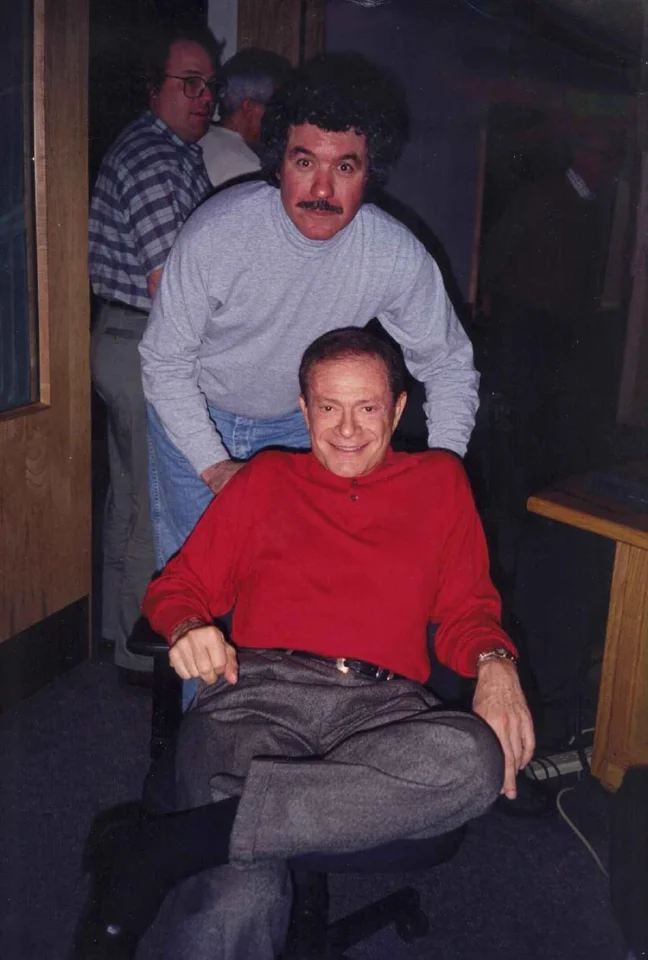
One thing I’d like to mention concerns La Cage aux Folles. Before this interview, you told me that when you heard the show at the Théâtre du Châtelet (Paris) this season, you found the arrangements less interesting than the original orchestration. I completely understand that reaction because the sound world is very different.
What’s funny is that several French friends who’ve seen the production told me exactly the opposite. They thought the arrangements were terrific! The reason is that, for a London revival, a completely new reduced orchestration was created for a much smaller ensemble. The production was successful, and that version eventually transferred to Broadway.
At the time, Jerry Herman called me and said, « The show is working beautifully, so I’m going to keep these new arrangements. » But then he immediately added, « I still miss the original orchestrations. »
Originally, La Cage aux Folles was written for an orchestra of about twenty-six musicians. Jerry understood perfectly well what had been lost when the score was reduced, even though he accepted the practical realities involved.
Some people assumed I might have been upset because I wasn’t asked to do the new version, but that was never the case. In fact, I had created alternative orchestrations myself for a revival in the 2000s. The issue was that the people managing Jerry’s estate were not musicians, and they approved the reduced version, which has continued to be used ever since.
But I can tell you something you may not know. Recently, the Jerry Herman estate asked me to re-orchestrate La Cage aux Folles for a fourteen-piece orchestra. The goal is to recover more of the richness, color, and spirit of the original score while still keeping the show economically practical for today’s producers.
That’s what I’m working on right now. Eventually, I believe the current nine-piece version will be replaced by this new edition, which is much closer to what Jerry and the original creative team had in mind.
6/ Among the many artists you’ve worked with, Stephen Sondheim occupies a very special place. In recent years, French audiences have gradually become more familiar with his work, and in 2025 you conducted a major production of Company, an adventure that continues in 2026. In your view, what did Sondheim bring to musical theatre that was different from the other great figures of Broadway?
I now have more than fifty years’ worth of memories connected with Stephen Sondheim. I first knew him when I was still a teenager in New York.
The first thing to understand is that Steve was a true New Yorker, completely immersed in the world of musical theatre. Like many young artists of his generation, he spent time playing piano in bars while dreaming of becoming a Broadway composer and lyricist.
We all know the story. He wrote the lyrics for West Side Story and Gypsy 43while he was still a very young man, which was already an extraordinary achievement. Yet despite those successes, he was still fighting to be recognized as a composer in his own right. I remember Steve telling me that if Company hadn’t become the success it did, he might still be playing piano in bars around Broadway! Of course, he had already written A Funny Thing Happened on the Way to the Forum and contributed to Gypsy and West Side Story, but he was still searching for his true place.
What ultimately set Stephen Sondheim apart was his training as a composer. He wanted to push beyond the traditional boundaries of musical theatre. Oscar Hammerstein II was his mentor as a lyricist, and musically he had built an extraordinarily broad and sophisticated foundation. His ambition was really to expand the language of Broadway.
I think that’s one of the reasons Sondheim occupies such a unique place today. In a sense, he extended and enriched the Great American Songbook.
When you listen to the score of A Little Night Music44, you sometimes feel as though Debussy, and especially Ravel, are standing just behind Steve’s shoulder. Jonathan Tunick, who orchestrated the show, intentionally emphasized those impressionistic colors. I remember musicians saying, « This almost sounds like Ravel. »
I think that in France, as in many European countries, the traditional operatic repertoire has been performed so extensively that audiences and institutions are naturally looking for new perspectives. That’s one reason musical theatre has gradually found its way into major cultural institutions.
And Sondheim’s music probably has stronger connections to the classical tradition than that of many other Broadway writers, while remaining unmistakably musical theatre. I certainly don’t mean to diminish anyone else’s achievements, but harmonically and structurally Sondheim’s writing is often a bit more sophisticated than, say, Rodgers and Hammerstein… .
That may help explain why his work continues to gain ground in France.
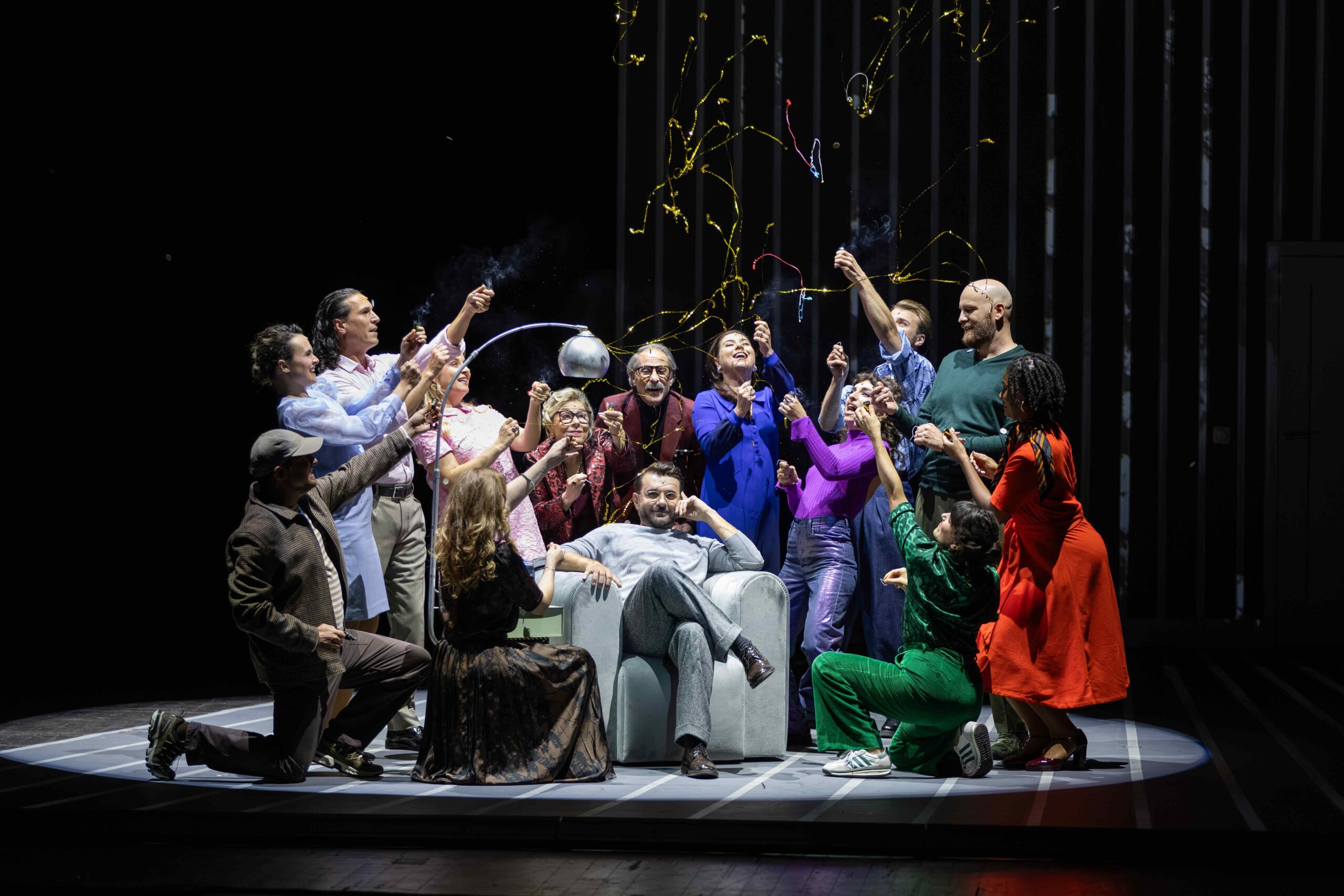
Take Company. France, and now Switzerland, are only now discovering this piece in major productions, even though it premiered fifty-five years ago. I attended the first New York preview in 1970, and from that very moment you could sense that something had changed. Broadway was never quite the same again.
What fascinates me about the score is the sheer variety of musical styles within a single show. That diversity makes it endlessly stimulating.
A song like Side by Side by Side comes directly out of a classic Broadway tradition, while Another Hundred People has a completely different urban energy. Then there’s the dance sequence Tick-Tock45, which unfortunately we weren’t able to include in our productions in France and Switzerland. I’d love for audiences to have more opportunities to see it, because it’s a very unusual piece of music and quite unlike anything else in the score.

7/ If I’m not mistaken, that number was originally created for Donna McKechnie46?
Yes, exactly. Donna McKechnie, who was also Michael Bennett’s wife and muse, is thankfully still with us today. She’s a remarkable artist and an extraordinary talent.
As for Tick-Tock, it’s important to remember that the musical arrangement was created by David Shire47, the distinguished film and theatre composer. He was really the architect of that arrangement.
And that’s what was so extraordinary about Company. Within a single production, you find this constellation of exceptional talents coming together. Stephen Sondheim, Michael Bennett, Jonathan Tunick, David Shire, Donna McKechnie… all contributing something unique to the final result.
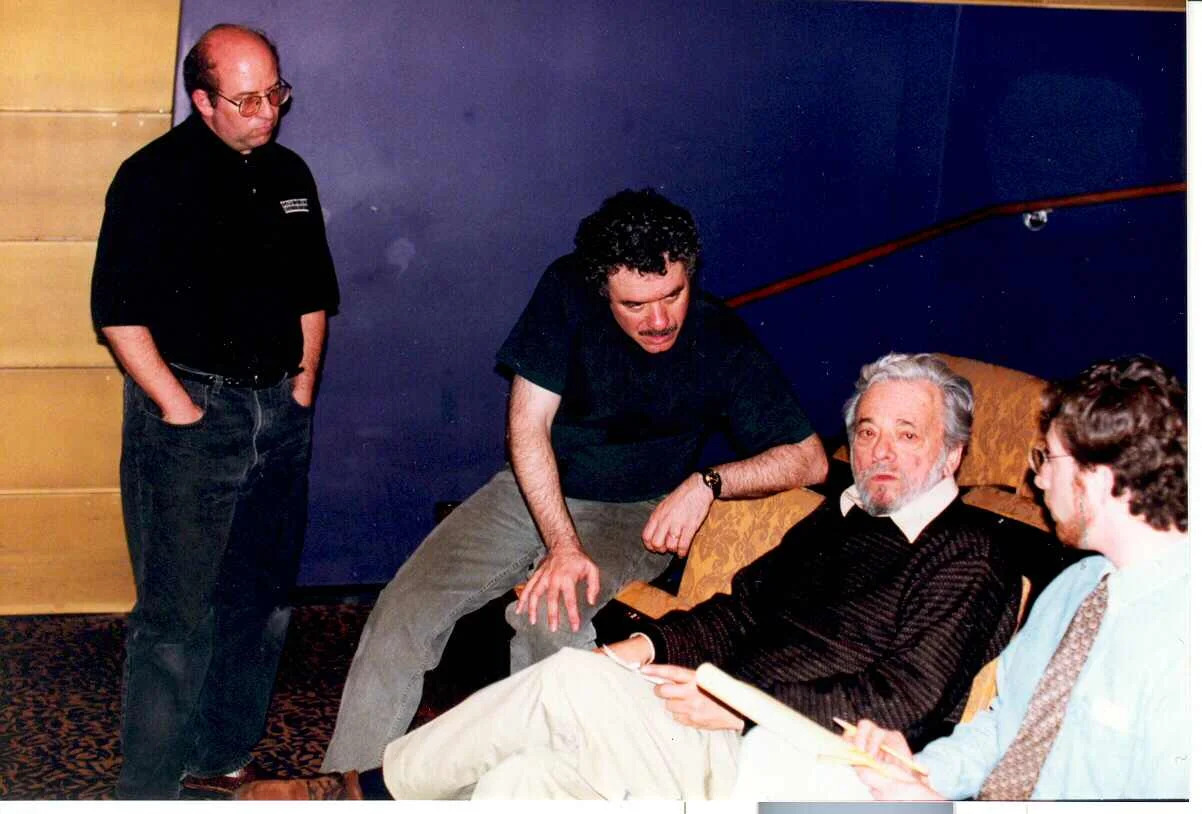
8/ Larry, when people compare Stephen Sondheim and Jerry Herman, they sometimes seem to represent two completely different worldviews: on the one hand, Herman’s warmth and optimism; on the other, Sondheim’s ambiguities and, at times, a certain darkness…
Yes, they really do belong to two very different worlds.The first thing to remember is that Jerry Herman was not trained in the same way Stephen Sondheim was. Yet Jerry had an absolutely extraordinary ear. I remember orchestral rehearsals where he would suddenly stop everything and say, « There’s a wrong note in the French horns. »I’d ask him where. He’d close his eyes for a few seconds and say, « Around measure forty-two. »And he was right.
He may not have had Sondheim’s academic background, but composers like Jerry Herman possessed remarkable musical instincts. Without those instincts, they could never have written the songs they left us. His lyrics were wonderful as well. But as the British like to say, comparing Jerry Herman and Stephen Sondheim is like comparing chalk and cheese. They’re simply not the same thing. I would say that Jerry Herman was, above all, a great songwriter, while Stephen Sondheim was a composer in the broadest sense of the word. Both left an indelible mark on Broadway, but they arrived there by completely different paths. And Jerry himself was a wonderful man, extraordinarily kind, gracious, and generous.
I’ve always had a particular affection for Mack and Mabel48, which I still consider one of his finest scores. Yet the show was a commercial disappointment when it opened. Jerry experienced that kind of setback more than once during his career. That’s simply the reality of Broadway. No composer enjoys nothing but successes. As time went on, Jerry also understood that the world of musical theatre was changing. He knew that the era which had produced many of his greatest triumphs was no longer quite the same. I remember a speech that generated a little controversy at the time. During an awards ceremony, he said, « It’s nice to know that old Broadway still has some fans ! » Some people misunderstood that remark, but I don’t believe he was trying to pit one generation against another. He was simply acknowledging that audiences’ tastes evolve.
In fact, Jerry once told me that he no longer had a strong desire to write another large-scale Broadway musical. He continued working on projects such as Mrs. Santa Claus49 and Miss Spectacular,50 but he understood that the artistic landscape had changed. What he did not want to do was compete with Sondheim.The two men respected each other enormously.They weren’t part of the same social circle, but they knew one another and genuinely admired each other’s gifts. Jerry appreciated Sondheim’s work, even though he knew he could never write that way himself. And conversely, I’m convinced that Sondheim would readily have acknowledged that he could never have written a Jerry Herman song. He could imitate the style. He could pay affectionate tribute to it. He could write something that evokes that world, as he does in Old Friends or in moments of Side by Side by Side. But it wasn’t his natural voice.
Jerry Herman and Stephen Sondheim spoke two different languages. And that’s precisely why they remain, today, two complementary giants in the history of Broadway.
Interview by Hervé Casini for the webzine « Résonances Lyriques »
1 South Pacific (1949): musical by Richard Rodgers (music) and Oscar Hammerstein II (book and lyrics), regarded as a masterpiece of Broadway’s Golden Age. Based on James A. Michener’s Tales of the South Pacific, it won the 1950 Pulitzer Prize for Drama.
2 The King and I (1951): another Rodgers and Hammerstein success, inspired by the story of Anna Leonowens, a British governess at the court of the King of Siam. Yul Brynner famously played the King more than 4,000 times during his career.
3 Larry Blank was born in Brooklyn on July 15, 1952.
4 Fiddler on the Roof (1964): landmark musical based on Sholem Aleichem’s stories of Jewish communities in Eastern Europe. It became one of Broadway’s greatest successes.
5 Jerry Bock (1928–2010): American composer best known for Fiorello! and Fiddler on the Roof.
6 Sheldon Harnick (1924–2023): American lyricist and Jerry Bock’s longtime collaborator.
7 Don Walker (1910–1999): major Broadway orchestrator who arranged numerous musical-theater classics; Larry Blank regards him as one of his principal teachers.
8 I Can Get It for You Wholesale (1962): Harold Rome musical set in New York’s garment industry, best remembered for bringing Barbra Streisand to public attention.
9 How to Succeed in Business Without Really Trying (1961): Frank Loesser’s satire of corporate life, winner of the Pulitzer Prize and several Tony Awards.
10 A Funny Thing Happened on the Way to the Forum (1962): Stephen Sondheim musical farce inspired by the comedies of Plautus.
11 Zero Mostel (1915–1977): legendary American actor and comedian, who originated the leading role in A Funny Thing Happened on the Way to the Forum and later Tevye in Fiddler on the Roof.
12 Anyone Can Whistle (1964): unconventional, avant-garde musical by Stephen Sondheim and Arthur Laurents. A commercial failure at its premiere, it is now considered a cult work.
13 The Great American Songbook: the body of classic American popular songs, mainly from the 1920s to the 1960s, associated with Broadway, Hollywood, and jazz.
14 Cole Porter (1891–1964): American composer and lyricist whose standards include Night and Day, I Get a Kick Out of You, Begin the Beguine, and I Love Paris.
15 Benny Goodman (1909–1986): American clarinetist and bandleader known as the “King of Swing.” A major figure in 1930s and 1940s jazz, he played in several Broadway productions early in his career.
16 Glenn Miller (1904–1944): American trombonist, arranger, and bandleader whose orchestra was among the Swing Era’s most popular.
17 Tommy Dorsey (1905–1956): American trombonist and bandleader, leader of one of jazz history’s most famous big bands; a young Frank Sinatra sang with his orchestra.
18 Harry James (1916–1983): leading Swing Era trumpeter and bandleader who helped launch Frank Sinatra’s career before Sinatra joined Dorsey.
19 Doc Severinsen (born 1927): virtuoso American trumpeter known both in jazz and as a television bandleader.
20 Johnny Carson (1925–2005): influential American television host whose The Tonight Show Starring Johnny Carson dominated late-night television for three decades.
21 Don Pippin (1926–2020): American conductor, musical director, and arranger, a Broadway mainstay and close collaborator of Jerry Herman.
22 Jerry Herman (1931–2019): celebrated composer and lyricist of Hello, Dolly!, Mame, and La Cage aux Folles.
23 Mame (1966): one of Jerry Herman’s greatest Broadway hits, with Angela Lansbury originating the title role.
24 A Chorus Line (1975): groundbreaking musical by Marvin Hamlisch, Edward Kleban, James Kirkwood Jr., and Nicholas Dante, directed by Michael Bennett; winner of nine Tony Awards and the Pulitzer Prize.
25 Marvin Hamlisch (1944–2012): American composer, pianist, and conductor, one of the few artists to win Emmy, Grammy, Oscar, and Tony Awards. His work includes the film score for The Way We Were and the musical A Chorus Line.
26 Michael Bennett (1943–1987): choreographer, director, and creator of A Chorus Line, a major innovator in Broadway dance.
27 Goodtime Charley (1975): musical by Larry Grossman and Hal Hackady based on the story of King Charles VII of France.
28 Joel Grey (born 1932): American actor, singer, and director internationally known for his portrayal of the Emcee in Cabaret.
29 Ann Reinking (1949–2020): American dancer, choreographer, and actress, a major Broadway star associated with Bob Fosse, for whom she was a muse.
30 Singin’ in the Rain: song composed in 1929 and made world-famous by the 1952 film musical starring Gene Kelly and Debbie Reynolds.
31 Nacio Herb Brown (1896–1964): American composer of many classic Hollywood musical-film songs.
32 Arthur Freed (1894–1973): legendary MGM lyricist and producer, a key figure in Hollywood’s Golden Age of musicals.
33 Roger Edens (1905–1970): MGM arranger, composer, and musical director who played an essential role in the careers of Judy Garland and Gene Kelly.
34 Ralph Burns (1922–2001): American arranger, orchestrator, and composer who worked with Woody Herman and later orchestrated Broadway hits including Chicago.
35 Woody Herman (1913–1987): American clarinetist, saxophonist, and bandleader, a leading Swing Era figure.
36 Billy May (1916–2004): arranger and bandleader known for his work with Frank Sinatra, Nat King Cole, and Capitol Records.
37 Conrad Salinger (1901–1962): MGM orchestrator who helped shape the sound of major film musicals in the 1940s and 1950s
38 Nelson Riddle (1921–1985): one of the twentieth century’s most influential arrangers, closely associated with Frank Sinatra, Ella Fitzgerald, and Nat King Cole.
39 Robert Russell Bennett (1894–1981): regarded as the father of modern Broadway orchestration; his credits include Oklahoma!, South Pacific, and The King and I.
40 Jonathan Tunick (born 1938): American orchestrator, arranger, and composer, the only orchestrator to have won Emmy, Grammy, Oscar, and Tony Awards.
41 Irwin Kostal (1911–1994): highly influential twentieth-century orchestrator and musical director who worked on Broadway and in Hollywood.
42 Copperfield (1981): musical adaptation of Charles Dickens’s novel David Copperfield.
43 Gypsy (1959): American musical-theater classic with music by Jule Styne and lyrics by Stephen Sondheim.
44 A Little Night Music (1973): musical inspired by Ingmar Bergman’s film Smiles of a Summer Night.
45 “Tick-Tock”: instrumental ballet in Company (1970), choreographed around the character of Kathy and often regarded as one of the original production’s most innovative numbers.
46 Donna McKechnie (born 1940): American dancer, singer, and actress who won a Tony Award for playing Cassie in A Chorus Line.
47 David Shire (born 1937): American film composer (The Conversation, All the President’s Men, Saturday Night Fever) and arranger who contributed to several major 1970s Broadway productions.
48 Mack and Mabel (1974): Jerry Herman musical often considered among his finest scores despite its initial commercial failure.
49 Mrs. Santa Claus (1996): television musical composed by Jerry Herman, starring Angela Lansbury.
50 Miss Spectacular: a late Jerry Herman project that remained unproduced on Broadway in its originally plananed form.